
When mental health feels difficult, it is rarely one thing going wrong. Sleep gets unsettled. Appetite changes. Relationships feel strained. Thoughts keep circling, sometimes at 2 a.m., sometimes all day. Holistic nursing starts right there — with the person, not just the problem. A person is more than a diagnosis, a symptom list, or a prescription. In this article, we explain what holistic nursing is, how a holistic nurse works, and what whole-person care can actually look like in mental health care. Plain language. No jargon. No promises about outcomes.
Key Takeaways
- Holistic nursing cares for the whole person — mind, body, and daily life — not only the symptoms that brought someone in.
- It works alongside standard medical care. It does not replace a diagnosis, a prescribed treatment, or medication.
- A holistic assessment looks at five connected areas: physical, mental, emotional, social, and spiritual health.
- Good holistic care is practical: sleep, routine, relationships, stress, and what gives life meaning all shape a treatment plan.
- If you are considering a change to your care, talk it through with your clinician first.
What Holistic Nursing Means
The American Holistic Nurses Association (AHNA) defines holistic nursing as all nursing practice that has healing the whole person as its goal. Put simply, the person — not only the condition — sits at the centre of care. A holistic nurse still relies on clinical knowledge, careful assessment, and evidence-based mental health care. The scope is just wider. Instead of looking only at the symptom that brought someone in, the nurse also asks how that person is living, coping, and feeling day to day.
The whole-person idea in plain language
Whole-person care starts from a simple idea: mind, body, and spirit are connected. A good way to picture it is the biopsychosocial approach — biology, psychology, and social life all shape mental health, and they shape each other. Poor sleep can make anxiety harder to manage. Ongoing stress can affect appetite, energy, and concentration. Loneliness can deepen low mood, while supportive relationships can make recovery feel more possible.
Person-centred care follows from that. It means care is shaped around the individual in front of the nurse, not around a standard template. Two people with the same diagnosis may have different worries, different daily routines, and different support at home. A holistic assessment tries to understand those differences before decisions are made, so the plan reflects the person as well as the condition.
Holistic nursing vs alternative medicine
Holistic nursing is not the same as alternative medicine. Alternative medicine is often presented as a replacement for standard medical care. Holistic nursing does the opposite: it complements standard care. A holistic nurse may work alongside a psychiatric evaluation, psychotherapy, and medication management, paying attention to the parts of life that standard appointments sometimes miss — sleep, routine, stress, relationships, and the things that give a person meaning.
So choosing holistic care does not mean setting aside medical treatment. And it does not mean a complementary practice can take the place of a diagnosis or a prescribed treatment. Integrative mental health care, at its best, brings these elements together: clinical care for the condition, and careful attention to the person living with it. If you are considering any change to your care, talk it through with your clinician first, so decisions are made with full information about your health.
Holistic nursing vs standard care vs alternative medicine
| Holistic nursing | Standard care | Alternative medicine | |
|---|---|---|---|
| Focus | The whole person — mind, body, and daily life | Mainly the diagnosis and its symptoms | Often one specific practice or remedy |
| Relationship to medical care | Works alongside it | Is the main form of care | Sometimes presented as a replacement for it |
| What a visit covers | Symptoms, sleep, stress, relationships, and routine | Symptoms and treatment, for the most part | The practice itself |
| Who shapes the plan | The patient and the clinician, together | Mostly the clinician | Often the practitioner or the practice |
The Five Areas a Holistic Assessment Looks At
A holistic assessment is broader than a symptom checklist. It usually explores five connected areas of life, because a change in one area often shows up in another. The point is not to judge any of them. It is to get a clearer picture of what support might actually help — including lifestyle factors that can quietly shape how someone feels week to week.
- Physical: Sleep, appetite, energy, movement, and any physical health concerns. A nurse may ask about rest and daily habits, because the body and the mind affect each other, and because physical discomfort can make emotional distress harder to carry.
- Mental: Mental status — thinking, concentration, memory, and how thoughts tend to run. For example, whether worries repeat, whether decisions feel harder than usual, or whether the mind feels foggy or restless.
- Emotional: How a person has been feeling over time, not only on a difficult day. This includes mood, irritability, sadness, fear, numbness, and also moments of calm or relief, which can show what is already helping.
- Social: Relationships, family, work, school, and community. Support, conflict, isolation, and the demands of daily life all shape mental health, and they shape what kind of care is realistic to follow through.
- Spiritual: What gives life meaning, purpose, or comfort. For some people that is faith or prayer; for others it is nature, creativity, family, or a sense of purpose in work or service. A holistic nurse asks about this respectfully, without assuming any particular belief.
What Holistic Care Looks Like in Mental Health
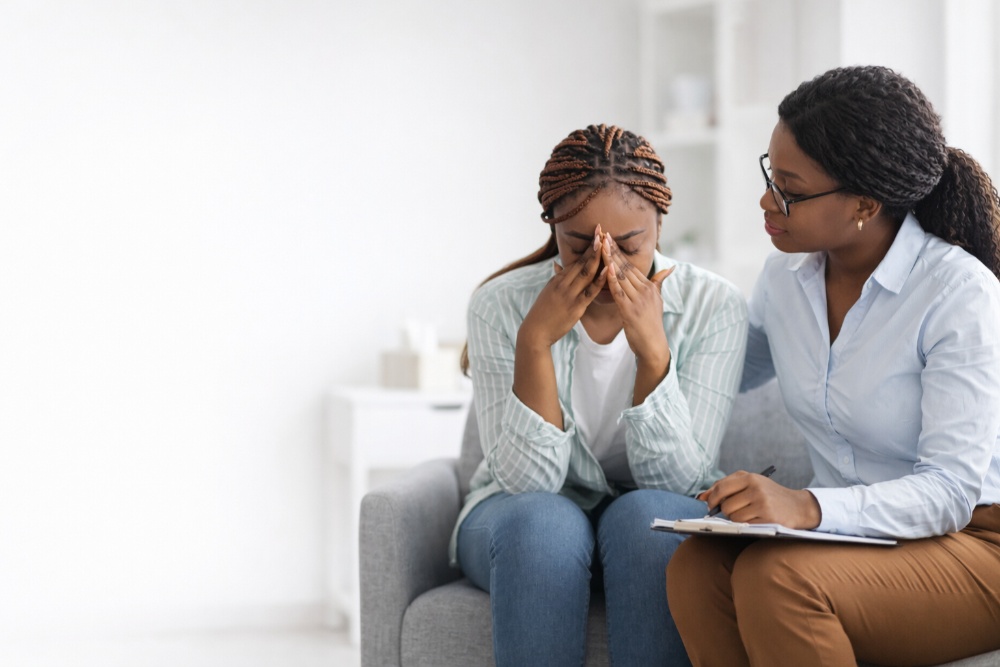
In mental health, holistic psychiatric nursing is practical, not abstract. It means the nurse listens carefully, asks about daily life as well as symptoms, and works with the patient to set goals that feel realistic. It also means paying attention to how treatment fits into a person’s actual week — their work hours, family responsibilities, finances, and support — rather than assuming a plan that looks good on paper will work in practice.
Beyond medication: sleep, routine, relationships, and stress
Medication can be an important part of mental health care for many people, and for some it is essential. Holistic care does not replace it. What it adds is attention to the everyday factors that surround it. A nurse may talk with a patient about sleep patterns, a regular daily routine, time with people who are supportive, and ways of noticing and responding to stress earlier, before it builds.
These conversations are not a substitute for treatment, and they are not instructions to stop or change any medication. They are part of understanding the whole picture. For example, if anxiety is worse after several nights of poor sleep, that pattern is worth naming. If low mood makes it hard to keep in touch with friends, rebuilding small, manageable contact may be part of the plan.
A psychiatric evaluation can help establish a diagnosis and a treatment plan, while individual psychotherapy offers a regular space to work through thoughts, feelings, and patterns with a clinician. Holistic care connects those clinical steps with the rest of a person’s life.
What a first visit may include
A first visit in holistic mental health care usually begins with conversation. You may be asked about what brought you in, how long you have felt this way, and how symptoms affect sleep, work, relationships, and daily tasks. The nurse may also ask about your medical history, any medications you take, your support at home, and what you hope care will help with. Some people find it helpful to bring a short note about their symptoms, questions, or concerns, so nothing important is forgotten.
By the end of a first visit, you should have a clearer sense of what the clinician heard, what the next steps are, and what questions remain open. If something is unclear, it is reasonable to ask for it to be explained again. Good care leaves room for questions.
What Holistic Nursing Is Not
It helps to be direct about the limits of holistic care. It is not a diagnosis by article. Reading about whole-person care cannot tell you what condition you have, or what treatment is right for you. Only a clinician who has assessed you can do that.
It is also not a promise of outcomes. No honest form of care can guarantee how quickly someone will feel better, or that a particular approach will work for everyone. Progress in mental health care is often gradual, and it can involve setbacks as well as improvement. What holistic nursing offers is a way of practising that keeps the whole person in view — carefully, respectfully, and with attention to the life around the symptoms.
If you are looking for a broader view of the care available, the conditions we treat page outlines the areas this practice works with. For general information about mental health, the National Institute of Mental Health offers introductory material on a wide range of topics at nimh.nih.gov/health/topics, and the American Holistic Nurses Association explains its definition of holistic nursing at ahna.org/About-Us/What-is-Holistic-Nursing.
Frequently Asked Questions
What does a holistic nurse do?
A holistic nurse provides nursing care that considers the whole person — physical, mental, emotional, social, and spiritual health — rather than focusing on symptoms alone. In mental health, that means careful assessment, listening, education, and working with the patient and the wider care team on a plan that fits the person’s life as well as their condition.
Is holistic nursing the same as alternative medicine?
No. Holistic nursing complements standard care; it does not replace it. Alternative medicine is often presented as an alternative to medical care. A holistic nurse works within clinical care — including evaluation, psychotherapy, and medication management where appropriate — while also paying attention to sleep, routine, relationships, stress, and meaning.
What is whole-person mental health care?
Whole-person mental health care is care that looks beyond a diagnosis to the person living with it. It considers how thoughts, emotions, relationships, and a sense of purpose interact, and it shapes treatment around the individual’s circumstances and goals. The aim is care that is both clinically sound and realistic to live with.
Does holistic care replace medication?
No. Holistic care does not replace medication, and it should not be used as a reason to stop or change a prescribed treatment. Medication decisions are made with a clinician, based on a full assessment of your health. Holistic care adds attention to sleep, routine, relationships, and support around treatment; it does not take treatment’s place.
If you would like whole-person psychiatric care in Anaheim Hills, book a consultation.